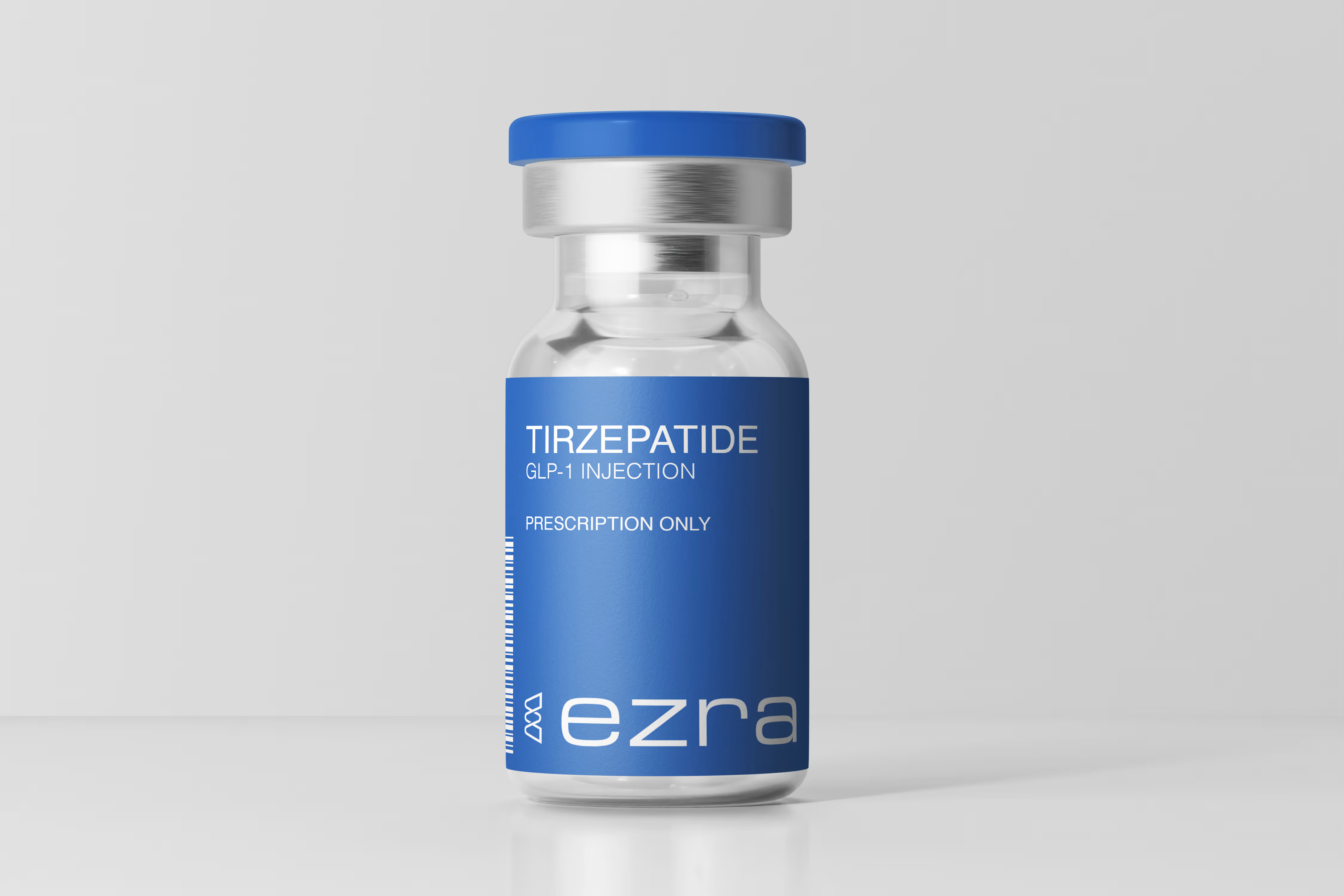
The term tirzepatide weight loss program refers to a structured approach to weight management in which the medication tirzepatide is used, generally alongside dietary, behavioural, and medical supervision components.
The medication itself — Tirzepatide — was originally developed and approved for type 2 diabetes mellitus.
More recently, its role in weight management (obesity/overweight) has become prominent, as clinical trials show meaningful weight loss in non-diabetic individuals too.
When you see “program” in this context, it means the medication is framed within a service (e.g., monthly prescription, medical monitoring, lifestyle guidance) rather than just taking the drug in isolation. For example, one provider describes their offering: “3 Month Program … Achieve significant weight loss with our compounded Tirzepatide injections, guided by board-certified physicians.”
2. How Tirzepatide Works in the Body
To appreciate how the tirzepatide weight loss program functions, it helps to understand the mechanism of the drug:
2.1 Dual-receptor action
Tirzepatide acts simultaneously on two hormone-receptor systems: GLP-1 (glucagon-like peptide-1) and GIP (glucose-dependent insulinotropic polypeptide) receptors.
Here’s what that means:
GLP-1 receptor agonism: helps slow gastric emptying (so food remains in the stomach longer), increases feelings of fullness (satiety), reduces appetite, and improves insulin secretion.
GIP receptor agonism: adds another dimension, enhancing metabolic responses, arguably making weight‐loss effects more pronounced than with GLP-1 alone.
2.2 Practical effects leading to weight loss
Because of the above, the medication leads to:
Reduced hunger and lower calorie intake.
Slower digestion/gastric emptying which promotes earlier and longer satiety.
Improved insulin sensitivity and better metabolic profile, which may reduce fat storage.
2.3 Evidence of impact
Clinical data show that people taking tirzepatide experienced significant average weight reductions — for example: 10 mg or 15 mg weekly doses saw weight loss in the range of ~22–23 kg (≈48-52 lb) over 72 weeks in study settings.
In the 36-week lead-in of another study, mean weight loss was ~21% of body weight (~22.5 kg / 50 lb) for individuals with obesity (without diabetes) treated with tirzepatide. In short: pharmacology supports meaningful weight loss, and the program builds on that foundation.
Who is an Appropriate Candidate?
Eligibility for a tirzepatide weight loss program depends on a combination of medical, health-status and lifestyle factors.
3.1 Medical eligibility
Because tirzepatide is a prescription medication with specific approvals and contraindications:
It is approved for type 2 diabetes mellitus.
For weight management, many programs reference BMI thresholds: e.g., BMI ≥ 30, or BMI ≥ 27 with at least one weight-related complication (such as hypertension, dyslipidaemia, obstructive sleep apnoea).
Certain medical histories may exclude the drug: for example, a personal or family history of medullary thyroid carcinoma or multiple endocrine neoplasia syndrome type 2 (MEN-
2) is a contraindication.
3.2 Lifestyle and readiness
Beyond medical factors, good candidates often:
Are motivated to follow through with weekly injections, follow-up, and lifestyle changes.
Understand that the medication alone isn’t a “magic pill”: accompanying lifestyle adjustments (diet, physical activity, behaviour) yield better results.
Are aware of potential side-effects and are prepared to monitor and manage them in conjunction with healthcare providers.
3.3 When it may not be right
Situations where the program may not be advisable include:
Pregnancy or plans to become pregnant (safety data may be lacking).
A history of pancreatitis or certain pancreatic diseases — caution is advised.
Known hypersensitivity to the medication or excipients.
Major contraindicated comorbidities as per physician assessment.
Selecting a program must begin with a thorough medical evaluation, review of benefits versus risks, and a conversation about expectations.
4. What the Program Typically Entails
When you enrol in a tirzepatide weight loss program, you can expect several components working together. Below is a breakdown of the typical workflow.
4.1 Initiation and consultation
You’ll start with a virtual or in-person medical consultation: health history, weight history, comorbidities, medications, allergies. For instance, one provider writes: “Convenient online consultations: meet with our healthcare professionals virtually … all from the comfort of home.”
Baseline measurements: weight, BMI, possibly labs (blood sugar, lipids, liver/kidney function) and other relevant markers.
4.2 Prescription and dose titration
The medication is administered once weekly via subcutaneous injection (abdomen/thigh/upper arm).
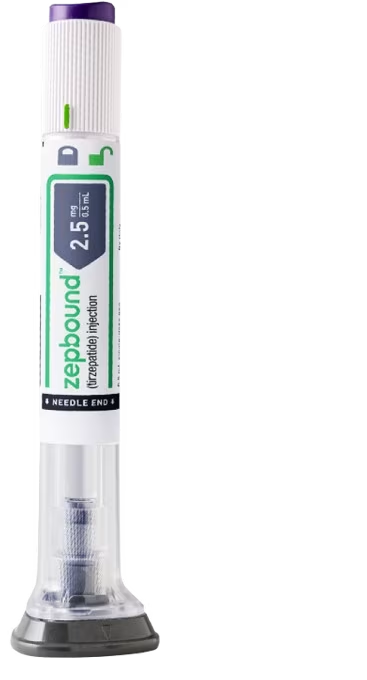
Initial dose may be low (e.g., 2.5 mg weekly) and increased gradually (e.g., every 4 weeks) based on tolerance and response.
4.3 Lifestyle and behavioural support
Although the program often emphasises the medication, most providers include guidance on nutrition (healthy eating patterns), physical activity, behavioural counselling and monitoring. For example: “Nutritional counselling to develop healthy eating habits … exercise guidance to help you stay active and boost metabolism.”
Regular check-ins: via messaging, telehealth, or in-person visits to track progress, side-effects, and adjust plans. e.g., “regular virtual consultations and unlimited messaging with healthcare providers” in one description.
4.4 Monitoring and maintenance
Weight and metabolic markers (blood glucose, lipids, etc.) are monitored periodically.
If weight loss is achieved, a maintenance strategy is reviewed: continuing the medication, adjusting dose, or transitioning to lower maintenance dose depending on individual case.
Ongoing lifestyle and behavioural support are critical to prevent weight regain.
4.5 Cost and logistics
Programs may have a monthly subscription or cost structure. For example: the provider at joinezra lists monthly cost from ~$296/month.
Shipment of medication, supplies, possibly labs, and provider support are all part of the operational side.
In effect, the program combines medication, medical oversight, and lifestyle interventions — aligning with weight management being a multifactorial endeavour.
5. Key Benefits You May Encounter
When entering a programme where the primary focus is the tirzepatide weight loss program, you can anticipate several benefits — though individual outcomes will vary.
5.1 Substantial weight loss
As noted, participants in clinical trials experienced meaningful weight reductions: for instance ~20% of body weight or more in certain cohorts. For many clients in program‐settings, this level of weight loss can translate into major changes (clothing sizes, mobility, health markers).
5.2 Improved metabolic health
Because tirzepatide improves insulin sensitivity and lowers blood sugar levels, it can lead to improvements in:
HbA1c (in diabetic individuals) or improved glucose regulation.
Reduced risk factors associated with obesity (e.g., dyslipidaemia, hypertension). Some programs list “lowers cholesterol levels, reducing risk of heart disease.”
5.3 Appetite control, satiety and eating behaviour
Many clients report feeling fuller sooner, having less desire to snack, and feeling better control over food choices. These behavioural effects can support sustainable lifestyle change rather than purely pharmacological change.
5.4 Convenience of dosing
Weekly administration makes it more convenient compared to daily medications or intense surgical options. Many programs emphasize “once-weekly injection: convenient, easy to administer.”
5.5 Potential for improved quality of life
As weight decreases, many clients experience more energy, improved mobility, less fatigue, and an uptick in self-confidence — all of which reinforce the positive momentum of a weight-loss journey.
6. Important Risks and Safety Considerations
No medication or program is risk-free. When discussing a tirzepatide weight loss program, transparency about risks is essential.
6.1 Common side-effects
Based on clinical data and reviews:
Gastrointestinal: nausea, vomiting, diarrhoea, constipation.
Other: injection-site reactions, burping, fatigue, dyspepsia.
These side-effects tend to be more prominent during dose escalation.
6.2 Monitoring and long-term considerations
Because of the above, any program must include:
Ongoing monitoring of weight, metabolic markers, side-effects.
Dose escalation is carefully managed, with adjustment if side-effects occur. Lifestyle support to reduce reliance solely on medication, which may mitigate risks related to rapid weight loss.
A clear discussion with the prescribing physician about how long the program is intended to run, what happens if you stop, and what maintenance looks like.
Practical Steps to Follow If You’re Considering the Program
Here is a practical “road-map” you can follow if you are thinking about entering a tirzepatide weight loss program.
Step 1: Research & select a reputable provider
Identify clinics or telehealth programmes that specialise in weight-management with medication.
Confirm: board-certified physicians, transparent pricing, monitoring protocols, lab work included, follow-ups scheduled.
Review patient testimonials (keeping in mind their differences).
Example: On one website they list “No insurance required … board-certified physicians … weekly injection”.
Step 2: Medical consultation
Complete a full medical evaluation: history of diabetes, thyroid issues, gallbladder disease, pancreatitis, etc.
Baseline labs: blood sugar/HbA1c, lipid panel, liver/kidney function, thyroid function.
Discuss your weight-history, previous attempts, current lifestyle, expectations.
Talk about cost, duration, what is included (medication, supplies, follow-ups).
Step 3: Program initiation & logistics
You’ll receive an initial dose, instructions on injection technique (abdomen/thigh/upper arm).
Training on storage, handling, what to do if you miss a dose.
Clear schedule for dose escalation and monitoring.
Onboarding for lifestyle support (dietician, exercise plan, behavioural counselling) where included.
Step 4: Monitor progress & adjust
Weight tracking: weekly or bi-weekly weigh-ins.
Monitor side-effects; communicate them with your provider. If nausea/constipation are burdensome, dosage might be adjusted.
Labs periodically (every 3-6 months) to track metabolic indicators.
Lifestyle plan: Keep up with modified diet, increased physical activity (tailored to your capacity and personal situation).
Step 5: Maintenance & long-term planning
Once you reach target weight (or your provider determines plateau), discuss maintenance dose or transition off medication carefully.
Acknowledge that stopping the medication may lead to weight regain unless lifestyle changes are durable.
Keep attending follow-ups, maintain healthy habits, adjust your activity or diet as your situation evolves.
Step 6: Cost-benefit & expectation setting
Be realistic: While very effective, outcomes vary by individual (genetics, lifestyle, starting weight, adherence).
Discuss cost: weekly injections, program fees, lab work, peripheral supplies (needles, etc.). Some programs quote monthly rates (e.g., US $296/month) for medication + service.
Understand that the medication complements, not replaces, healthy lifestyle patterns — the program is most effective when you actively engage in the process.
Frequently Asked Questions (FAQs)
Here are common questions people raise about the tirzepatide weight loss program, along with clear answers.
Q1. What kind of weight-loss results can I realistically expect?
A1. In clinical trials, patients with obesity (without diabetes) taking tirzepatide attained average weight loss of ~20% of body weight over around 72 weeks at higher doses (10 mg/15 mg per week). Program‐settings may vary. It also depends on how much lifestyle change you make, your starting weight, dose, adherence, and individual metabolism.
Q2. How soon will I see results?
A2. Some improvement (reduced appetite, early fullness) may be experienced within 2–4 weeks of starting. More meaningful weight-loss tends to occur over months as dose titration progresses and lifestyle support takes effect.
Q3. Is the medication safe long-term?
A3. While clinical‐trial data show good efficacy and manageable safety profiles, long-term real-world data are still emerging. Some risks (e.g., gallstones with rapid weight loss, thyroid C-cell tumour risk) require ongoing monitoring. There is also data showing that stopping treatment often leads to weight regain. This suggests that for many people, long-term (or indefinite) maintenance may be required.
Q4. What happens if I stop the medication?
A4. In one withdrawal study, subjects who discontinued tirzepatide regained an average 14% of body weight in 52 weeks, while those who continued the therapy lost an additional ~5.5%. This means stopping may lead to weight gain unless lifestyle changes are very solid.















.avif)

















.avif)